


































INNOVATIV
Band 79: Janet Wagner Band 78: Philip Franklin Orr Band 77: Carina Dony Band 76:
Linda Freyberg
Sabine Wolf (Hrsg.)
Band 75: Denise Rudolph Band 74: Sophia Paplowski Band 73: Carmen Krause Band 72:
Katrin Toetzke
Dirk Wissen
Band 71: Rahel Zoller Band 70: Sabrina Lorenz Band 69: Jennifer Hale Band 68:
Linda Schünhoff
Benjamin Flämig
Band 67:
Wilfried Sühl-Strohmenger
Jan-Pieter Barbian
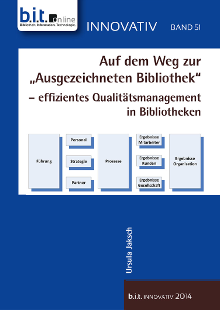
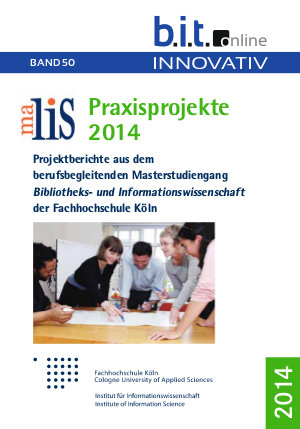
Band 66: Tina Schurig Band 65: Christine Niehoff Band 64: Eva May Band 63: Eva Bunge Band 62: Nathalie Hild Band 61: Martina Haller Band 60: Leonie Flachsmann Band 59: Susanne Göttker Band 58: Georg Ruppelt Band 57: Karin Holste-Flinspach Band 56: Rafael Ball Band 55: Bettina Schröder Band 54: Florian Hagen Band 53: Anthea Zöller Band 52: Ursula Georgy Band 51: Ursula Jaksch Band 50: Hermann Rösch (Hrsg) Band 49: Lisa Maria Geisler Band 48: Raphaela Schneider Band 47: Eike Kleiner
Bestellen Sie jetzt online!
6. März 2026
  WEITERE NEWS
Aktuelles aus
L
ibrary
Essentials

In der Ausgabe 02/2026 (März 2026) lesen Sie u.a.:

  • Seniorinnen und Senioren entdecken soziale Netzwerke – Chancen und Aufgaben für Bibliotheken
  • Chatbots im Auskunftsdienst wissenschaftlicher Bibliotheken
  • Bibliotheken unter Druck – Was der Hamburger Sparkurs über den Zustand
    des Wissenschaftssystems verrät
  • Die „Big Three“ der Wissenschaftsinformation – Web of Science, Scopus und OpenAlex im systematischen Vergleich
  • Der Strukturwandel im italienischen Buchmarkt – Lehren für Europa,
    die Leseförderung, den Buchhandel
    und Künstliche Intelligenz
  • GenAI in der Hochschulbildung –
    Wer forscht weltweit zu ChatGPT und Co.?
  • Jenseits des Akronyms –
    Wie wissenschaftliche Bibliotheken DEI
    unter politischem Druck neu verankern
  • Kann Bibliotherapie helfen, die Krisen
    der Gegenwart zu bewältigen?
  • Web-Barrierefreiheit pragmatisch umsetzen – Kleine Schritte mit großer Wirkung
  • Wenn die KI die Nachrichten auswählt, verändert sich die öffentliche Wahrnehmung
  • Zwischen Plattformökonomie und kulturellem Gedächtnis – Hat das physische Medium noch eine Zukunft?
u.v.m.
  fachbuchjournal

Dublin-based nonprofit lays off 80 central Ohio workers,
cites AI and federal cuts

DUBLIN, Ohio (WCMH) — A Dublin-based organization that manages the Dewey Decimal System and partners with libraries worldwide has laid off dozens of central Ohio employees, citing the rise of artificial intelligence and federal funding cuts.

OCLC, a global nonprofit with thousands of library members in more than 100 countries, confirmed to NBC4 it recently reduced its central Ohio workforce by about 80 positions. Headquartered at 6565 Kilgour Place in Dublin, OCLC said in a statement that the layoffs come as the organization “is operating in a rapidly changing environment.”

Inside Intel’s announcement to further slow construction in New Albany

“Artificial Intelligence and other technology changes require different skills and provide opportunity for efficiencies,” spokesperson Bob Murphy said. “Reasons for this adjustment include shifts in technical skill requirements, growing influence of artificial intelligence, and ongoing changes in higher education and libraries.”.

Still, OCLC has several open positions and will hire for more new roles in the future as the organization continues “to expand to serve libraries all over the world,” Murphy said. It’s unclear whether the nonprofit’s new roles will be based in central Ohio, but six of OCLC’s seven active job postings state they are for hybrid roles in Dublin.

OCLC employs a global staff of 1,300, including about 800 in central Ohio. The organization serves public institutions and libraries around the world by providing shared technology, software, research and data services like WorldCat, the world’s largest library database that publishes the Dewey Decimal System.

The library nonprofit’s layoffs follow the Trump administration’s decision earlier this year to dismantle the Institute of Museum and Library Services, an agency that funds and promotes libraries and cultural institutions nationwide. The move means Ohio libraries could lose millions of dollars in funding, used to support programs accessible to communities across the state.

What the end of pandemic rental assistance means for Columbus

While OCLC partly points to AI for the workforce cuts, the organization announced in June it using AI “to deliver faster, smarter resource sharing solutions for libraries.” First launched in 2020 as automation tools, the nonprofit’s latest “smart fulfillment features” now incorporate AI that optimizes interlibrary loan processes and enabling libraries to deliver items faster.

The organization was founded in 1967 as the Ohio College Library Center, but later changed its name to OCLC.

https://www.nbc4i.com/news/local-news/dublin/dublin-based-nonprofit-lays-off-80-central-ohio-workers-cites-ai-and-federal-cuts/