








































INNOVATIV
Band 79: Janet Wagner Band 78: Philip Franklin Orr Band 77: Carina Dony Band 76:
Linda Freyberg
Sabine Wolf (Hrsg.)
Band 75: Denise Rudolph Band 74: Sophia Paplowski Band 73: Carmen Krause Band 72:
Katrin Toetzke
Dirk Wissen
Band 71: Rahel Zoller Band 70: Sabrina Lorenz Band 69: Jennifer Hale Band 68:
Linda Schünhoff
Benjamin Flämig
Band 67:
Wilfried Sühl-Strohmenger
Jan-Pieter Barbian
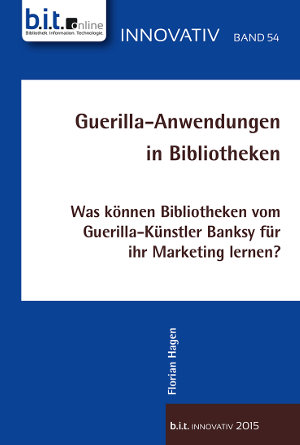
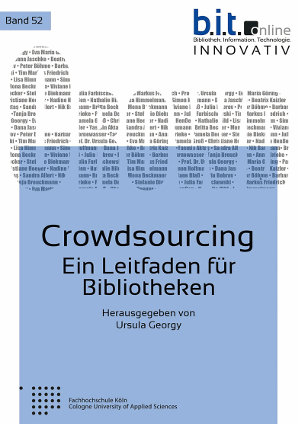
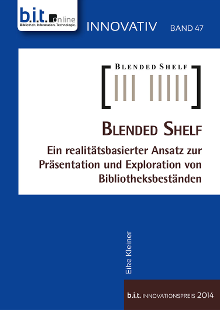
Band 66: Tina Schurig Band 65: Christine Niehoff Band 64: Eva May Band 63: Eva Bunge Band 62: Nathalie Hild Band 61: Martina Haller Band 60: Leonie Flachsmann Band 59: Susanne Göttker Band 58: Georg Ruppelt Band 57: Karin Holste-Flinspach Band 56: Rafael Ball Band 55: Bettina Schröder Band 54: Florian Hagen Band 53: Anthea Zöller Band 52: Ursula Georgy Band 51: Ursula Jaksch Band 50: Hermann Rösch (Hrsg) Band 49: Lisa Maria Geisler Band 48: Raphaela Schneider Band 47: Eike Kleiner
Bestellen Sie jetzt online!
8. April 2026
  WEITERE NEWS
Aktuelles aus
L
ibrary
Essentials

In der Ausgabe 02/2026 (März 2026) lesen Sie u.a.:

  • Seniorinnen und Senioren entdecken soziale Netzwerke – Chancen und Aufgaben für Bibliotheken
  • Chatbots im Auskunftsdienst wissenschaftlicher Bibliotheken
  • Bibliotheken unter Druck – Was der Hamburger Sparkurs über den Zustand
    des Wissenschaftssystems verrät
  • Die „Big Three“ der Wissenschaftsinformation – Web of Science, Scopus und OpenAlex im systematischen Vergleich
  • Der Strukturwandel im italienischen Buchmarkt – Lehren für Europa,
    die Leseförderung, den Buchhandel
    und Künstliche Intelligenz
  • GenAI in der Hochschulbildung –
    Wer forscht weltweit zu ChatGPT und Co.?
  • Jenseits des Akronyms –
    Wie wissenschaftliche Bibliotheken DEI
    unter politischem Druck neu verankern
  • Kann Bibliotherapie helfen, die Krisen
    der Gegenwart zu bewältigen?
  • Web-Barrierefreiheit pragmatisch umsetzen – Kleine Schritte mit großer Wirkung
  • Wenn die KI die Nachrichten auswählt, verändert sich die öffentliche Wahrnehmung
  • Zwischen Plattformökonomie und kulturellem Gedächtnis – Hat das physische Medium noch eine Zukunft?
u.v.m.
  fachbuchjournal
2009 bis 2023

Springer Nature embraces AI tools across the publishing process, resulting in less friction and increased author satisfaction

In 2025, over 1.5m papers benefited from nearly 60 AI tools supporting screening, editorial evaluation, retention and research integrity — set to increase by 25% in 2026.

As global research output continues to see substantial year-on-year growth, publishers need to work harder and smarter to ensure the quality and integrity of research and maintain speed. Springer Nature is responding by investing in AI tools that are embedded across the publishing process — supporting authors, editors and reviewers at the points where they need it most – always with expert human oversight.

Central to this approach is Snapp, Springer Nature’s peer review platform — created with continuous researcher feedback. Now used by more than 50% of Springer Nature journals, Snapp provides a seamless publishing experience and surfaces relevant AI tools directly within existing editorial workflows. This targeted approach is delivering high levels of satisfaction with the platform among authors, editors, and reviewers, with 90%, 70% and 81% respectively rating their experience as ‘good’ or ‘excellent’. The result being authors can spend more time doing research, and editors and reviewers can make better and faster decisions.

Frank Vrancken Peeters, Chief Executive of Springer Nature, commented:

“We’re embracing AI where it makes the biggest difference for researchers — reducing friction for authors, creating simpler workflows for editors and reviewers, and enhancing both the use and discovery of high-quality research. Our approach continues to be author-led, with transparency about where AI is used and clear human oversight and accountability, so we can continue to deliver the high-quality trusted research and publishing service our communities expect.”

The strong benefit researchers see in these tools can be seen in the following 2025 numbers:

  • More than half a million ‘clicks to submit’ took place via Journal Finder, helping authors quickly identify the best journal for their work.

  • Editor Evaluation tool was used across nearly half a million manuscripts, helping editors rapidly know if a paper is based on sound science.

  • Peer Reviewer Recommender generated over 400,000 recommendations, helping speed up the process by identifying appropriate reviewers more efficiently.

  • Journal Transfer Recommender made over half a million transfer recommendations (a 40% increase on 2024) helping authors?find?a more?suitable home for their manuscript, taking funding options into account.

  • AI tools identified 25,000 papers as having issues such as image manipulation, fake references and fabricated text.

Springer Nature continues to take a responsible, researcher-led approach to AI, working with its community to identify where tools can have the greatest impact. Alongside established AI tools, the publisher is rolling out additional author-facing tools — including AI-generated research summaries, natural-language search within papers, and in-paper chat — to further support research discovery, accessibility and engagement.

www.springernature.com