





































INNOVATIV
Band 79: Janet Wagner Band 78: Philip Franklin Orr Band 77: Carina Dony Band 76:
Linda Freyberg
Sabine Wolf (Hrsg.)
Band 75: Denise Rudolph Band 74: Sophia Paplowski Band 73: Carmen Krause Band 72:
Katrin Toetzke
Dirk Wissen
Band 71: Rahel Zoller Band 70: Sabrina Lorenz Band 69: Jennifer Hale Band 68:
Linda Schünhoff
Benjamin Flämig
Band 67:
Wilfried Sühl-Strohmenger
Jan-Pieter Barbian
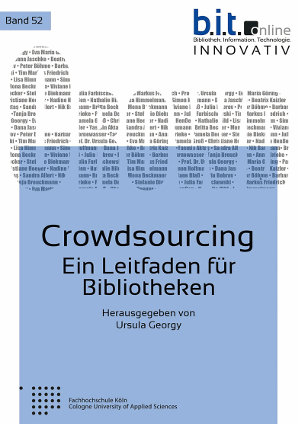
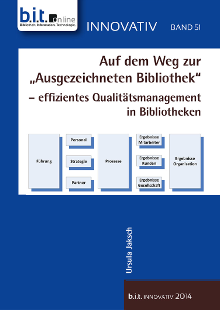
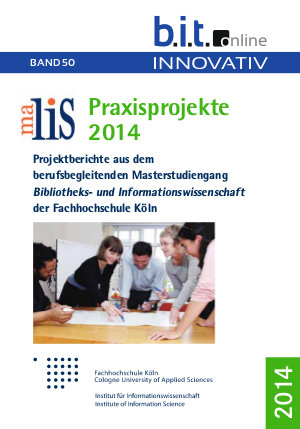
Band 66: Tina Schurig Band 65: Christine Niehoff Band 64: Eva May Band 63: Eva Bunge Band 62: Nathalie Hild Band 61: Martina Haller Band 60: Leonie Flachsmann Band 59: Susanne Göttker Band 58: Georg Ruppelt Band 57: Karin Holste-Flinspach Band 56: Rafael Ball Band 55: Bettina Schröder Band 54: Florian Hagen Band 53: Anthea Zöller Band 52: Ursula Georgy Band 51: Ursula Jaksch Band 50: Hermann Rösch (Hrsg) Band 49: Lisa Maria Geisler Band 48: Raphaela Schneider Band 47: Eike Kleiner
Bestellen Sie jetzt online!
17. Juni 2026
  WEITERE NEWS
Aktuelles aus
L
ibrary
Essentials

In der Ausgabe 04/2026 (Mai 2026) lesen Sie u.a.:

  • Wie verlässlich sind Metadaten für Forschungsdaten wirklich?
  • Erfundene Quellen – wie KI-Zitationen die Wissenschaft unter Druck setzen
  • Zwischen Bildschirmzeit, Stress und Lernverlust
  • Warum Bibliotheken im Zeitalter von KI wichtiger werden und mit einem Vertrauensparadox zu kämpfen haben
  • Schweden setzt in Schulen wieder auf Bücher
  • Warum KI-Kompetenz mehr sein muss als Toolwissen
  • Wie stark KI-Texte das Netz schon prägen
  • Open Access bringt Vorteile, aber nicht in jedem Fach auf die gleiche Weise
  • Was ChatGPT und Ghostwriting über Autorschaft verraten
  • Warum E-Books in US-Schulen zur Kostenfrage werden
u.v.m.
  fachbuchjournal
2009 bis 2023

Taylor & Francis publishes first Plain Language
Summary of Publication in veterinary science

PLSPs to increase accessibility of research findings
for veterinary professionals, pet owners, and non-specialists

Taylor & Francis has announced the publication of the first Plain Language Summary of Publication (PLSP) in veterinary research, a milestone in making discoveries in animal health more accessible, engaging and impactful. This new initiative bridges the gap between complex scientific findings and practical understanding.

PLSPs are open access, standalone, peer-reviewed summaries of a research article, written by at least one author from the original paper. Using clear, jargon-free language, they include a combination of both text and graphics to make the research as easy as possible to understand. Taylor & Francis introduced PLSPs to its medical journals in 2023.

Published in Veterinary Quarterly, the new veterinary PLSP, ‘Discovery of a SLAMF1 gene change that increases dogs’ risk of developing canine atopic dermatitis: a plain language summary’, summarizes a major advance in the understanding of a chronic skin condition affecting up to 30% of dogs in some populations. This research has implications for diagnostics, breeding strategies, and therapeutic development. In addition to making the research quicker to digest for veterinary professionals, the PLSP makes the findings available to a broader, non-specialist audience, including breeders and owners.

In recent years plain language summaries have become best practice in human medicine, transforming how research is communicated. Using a multidisciplinary approach, with stakeholders from human and veterinary medicine (Mars Petcare), medical communication agencies (Amica Scientific) and publishing (Taylor & Francis), their introduction to veterinary publishing provides a new way to present veterinary science.

The breadth and societal relevance of veterinary research, which spans animal welfare, disease, nutrition, and public health, means there is substantial value in making it accessible. Veterinary clinicians, technicians, nurses, allied professionals, and pet owners all rely on evidence-based information to make informed decisions.

“The publication of this first veterinary PLSP represents more than an innovative publishing milestone; it is a cultural shift toward greater inclusivity and improved communication of science,” said Katherine Bowen, Publications Lead, Waltham Petcare Science Institute, Mars Petcare. “They have great potential for supporting informed decision-making across the veterinary care pathway and ultimately benefiting the animals at the center of that care.”

Rachel Jenkins, Head of Plain Language Summaries at Taylor & Francis, added, “The expansion of PLSPs into veterinary reflects our commitment to making research accessible across all areas of health and science. I believe PLSPs in veterinary medicine will be as useful as they have proven to be in human medicine, helping everyone from veterinary professionals to pet owners to engage with and apply the latest research.”