













































INNOVATIV
Band 79: Janet Wagner Band 78: Philip Franklin Orr Band 77: Carina Dony Band 76:
Linda Freyberg
Sabine Wolf (Hrsg.)
Band 75: Denise Rudolph Band 74: Sophia Paplowski Band 73: Carmen Krause Band 72:
Katrin Toetzke
Dirk Wissen
Band 71: Rahel Zoller Band 70: Sabrina Lorenz Band 69: Jennifer Hale Band 68:
Linda Schünhoff
Benjamin Flämig
Band 67:
Wilfried Sühl-Strohmenger
Jan-Pieter Barbian
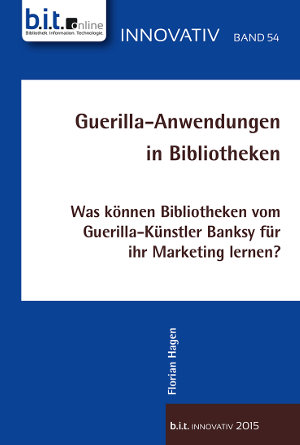
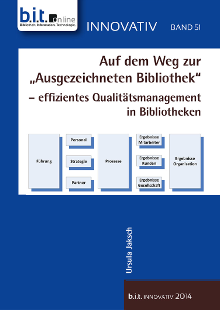
Band 66: Tina Schurig Band 65: Christine Niehoff Band 64: Eva May Band 63: Eva Bunge Band 62: Nathalie Hild Band 61: Martina Haller Band 60: Leonie Flachsmann Band 59: Susanne Göttker Band 58: Georg Ruppelt Band 57: Karin Holste-Flinspach Band 56: Rafael Ball Band 55: Bettina Schröder Band 54: Florian Hagen Band 53: Anthea Zöller Band 52: Ursula Georgy Band 51: Ursula Jaksch Band 50: Hermann Rösch (Hrsg) Band 49: Lisa Maria Geisler Band 48: Raphaela Schneider Band 47: Eike Kleiner
Bestellen Sie jetzt online!
4. Mai 2026
  WEITERE NEWS
Aktuelles aus
L
ibrary
Essentials

In der Ausgabe 03/2026 (April 2026) lesen Sie u.a.:

  • Nationales Kultur­erbe unter Druck: Der Stopp des DNB-Erweiterungsbaus und seine Folgen
  • Entwicklungen im Medienalltag
  • Vom Datenhype zur Datenkompetenz: Warum Data Literacy zur Kernaufgabe
    von Bibliotheken wird
  • Warum Bibliotheken bei KI, Lizenzen
    und Fair Use mitreden müssen
  • Entwicklungen für die Zukunft
    von Bibliotheken
  • Forschungsdaten als Publikationsform
  • Wie Forschende mit KI-gestützten Recherchetools arbeiten
  • KI-Erschöpfung und „Vocational Awe“
    in wissenschaftlichen Bibliotheken
  • Aufmerksamkeitskrise oder Designproblem? Was Bibliotheken aus der Debatte über Lesen und Bildschirme lernen können
  • Die Stiftsbibliothek St. Gallen:
    Ein 1.300 Jahre altes Wissensarchiv
  • Bibliotheken als Räume für Wohlbefinden
    im Gesundheitswesen
  • Das Ende eines Formats: Der Niedergang des Massenmarkt-Paperbacks
u.v.m.
  fachbuchjournal
2009 bis 2023

Oxford University Press journal quality confirmed by new impact factors

The exceptional standards of Oxford University Press (OUP) journals has been confirmed with the release of the 2011 Journal Citation Reports© by Thomson Reuters. Over two-thirds of the titles in the publisher’s list have increased their impact factor since last year, attesting to OUP’s continued commitment to improving the quality of its journals.

Of the OUP journals included in the reports, nearly a third are in the top 10 per cent of at least one subject category and over 85 per cent are in the top half of at least one subject category. The continuing upward trend of OUP’s journal impact factors reflects the increasing strength of both individual titles and the overall Oxford Journals Collection.

Mandy Hill, Publishing Director of OUP’s Global Academic Publishing said, “Our focus on high-quality content is a defining characteristic of OUP and the books and journals that we publish. Whilst impact factors are just one metric to consider when judging journal quality, we are delighted by the continued improvement in the impact factor and rankings of our titles. This demonstrates the effectiveness of our focus on product development and quality.”

Journal Highlights
The results of the 2011 Journal Citation Reports© demonstrate the quality of titles across the Oxford Journals Collection, with impressive highlights in a range of subject categories, including medicine, public health, social sciences,  mathematics, and physical sciences.

OUP journals have been the highest-ranked titles in the Gerontology and Business & Finance categories for two years running; occupied the top position in both the Obstetrics & Gynaecology and Reproductive Biology categories for over ten years; and were also first in the Mathematical & Computational Biology and Public, Environmental, & Occupational Health categories. OUP can now also boast journals in the first, second, and fourth positions in Reproductive Biology; the numbers two and three journals in Economics; and the second and third ranking tiles in the Infectious Diseases category.