

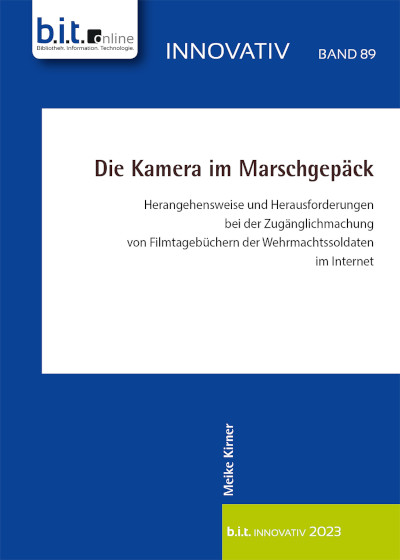

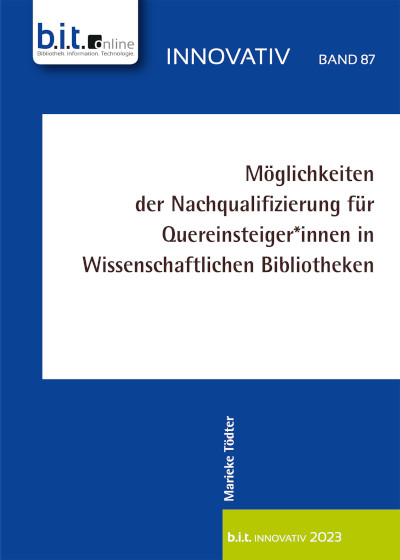
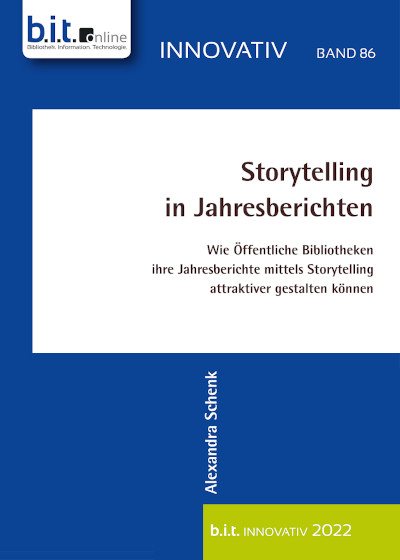
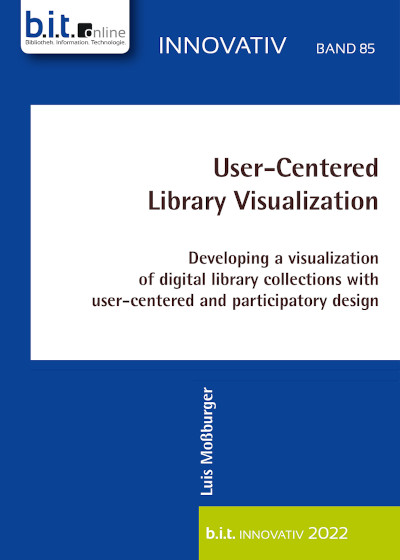
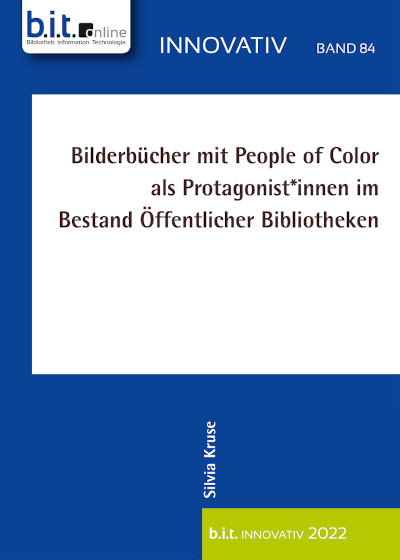
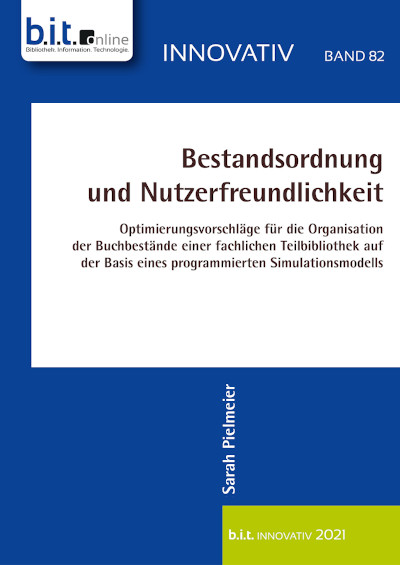
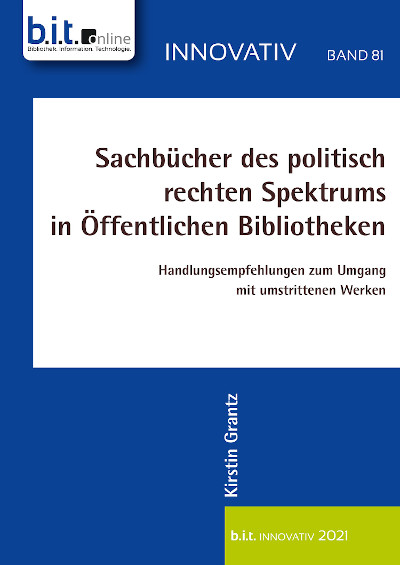
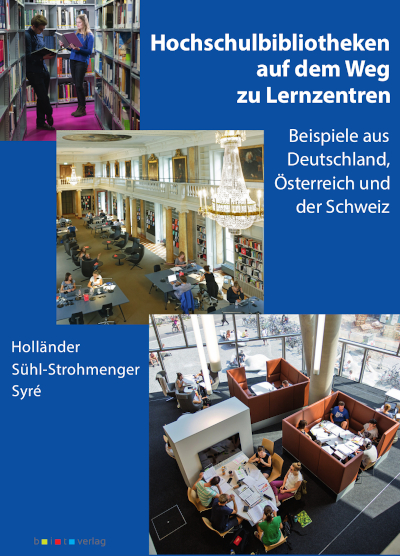








INNOVATIV
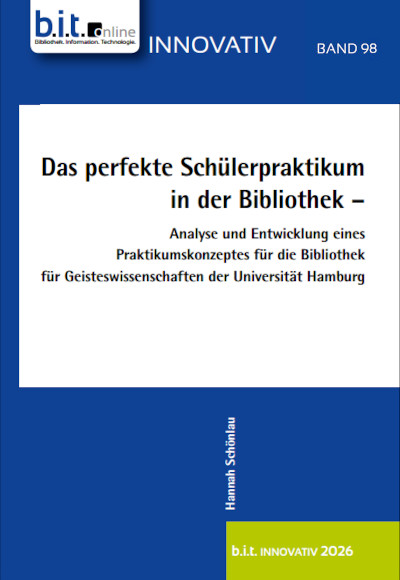
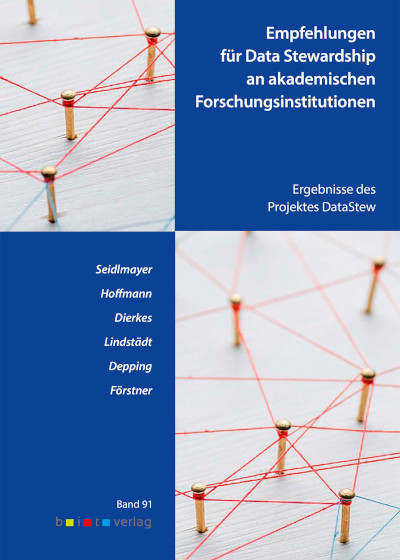
Band 79: Janet Wagner Band 78: Philip Franklin Orr Band 77: Carina Dony Band 76:
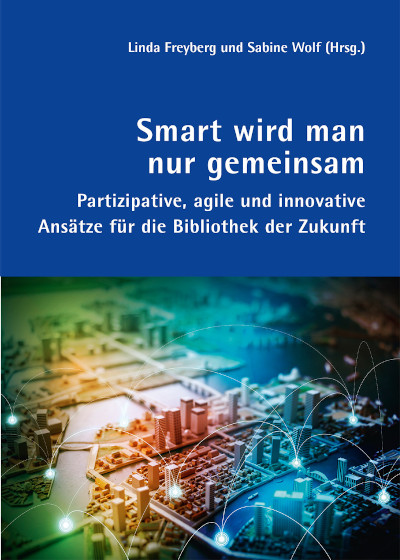
Linda Freyberg
Sabine Wolf (Hrsg.)
Band 75: Denise Rudolph Band 74: Sophia Paplowski Band 73: Carmen Krause Band 72:
Katrin Toetzke
Dirk Wissen
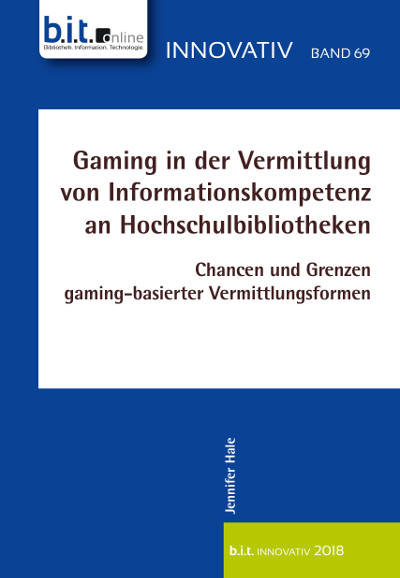
Band 71: Rahel Zoller Band 70: Sabrina Lorenz Band 69: Jennifer Hale Band 68:
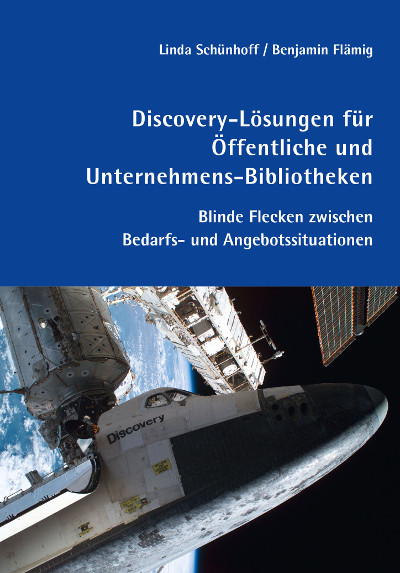
Linda Schünhoff
Benjamin Flämig
Band 67:
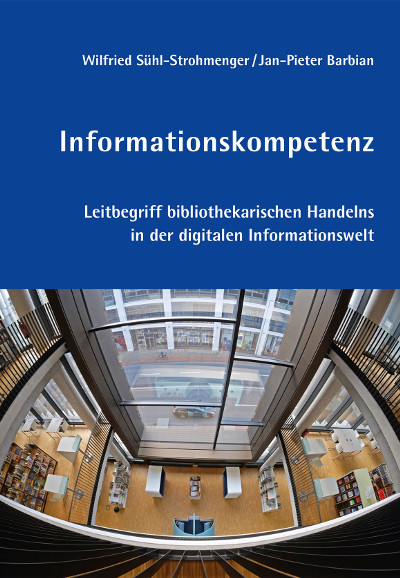
Wilfried Sühl-Strohmenger
Jan-Pieter Barbian
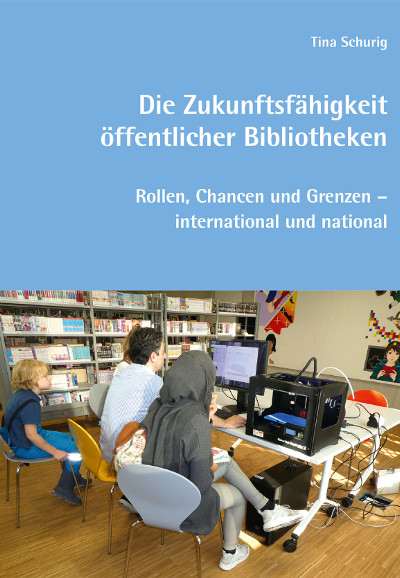
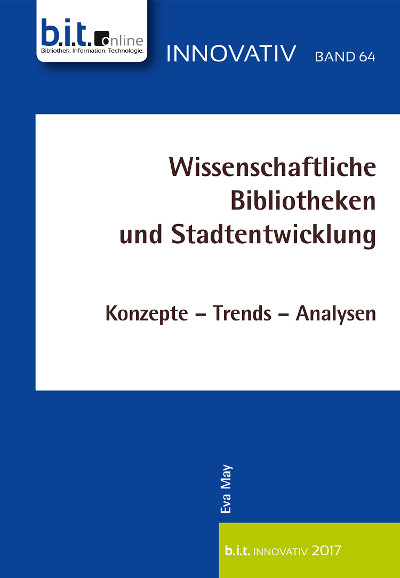
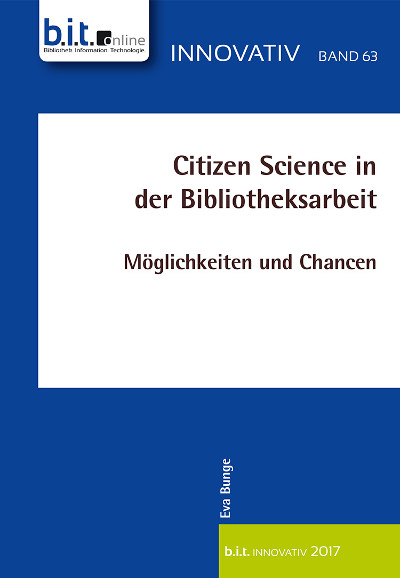
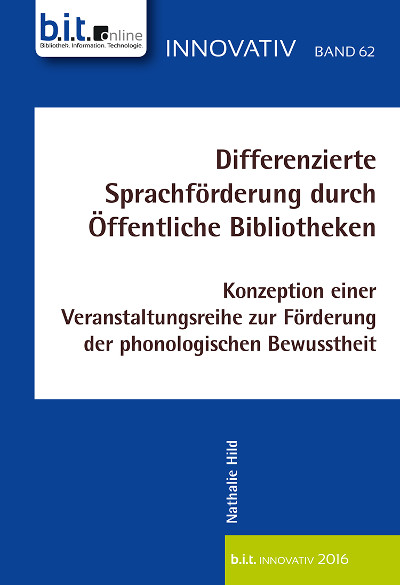
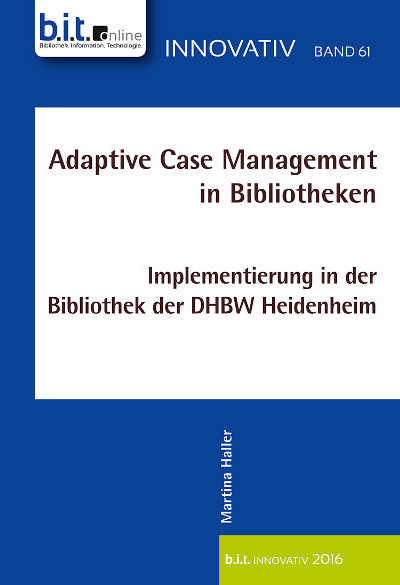
Band 66: Tina Schurig Band 65: Christine Niehoff Band 64: Eva May Band 63: Eva Bunge Band 62: Nathalie Hild Band 61: Martina Haller Band 60: Leonie Flachsmann Band 59: Susanne Göttker Band 58: Georg Ruppelt Band 57: Karin Holste-Flinspach Band 56: Rafael Ball Band 55: Bettina Schröder Band 54: Florian Hagen Band 53: Anthea Zöller Band 52: Ursula Georgy Band 51: Ursula Jaksch Band 50: Hermann Rösch (Hrsg) Band 49: Lisa Maria Geisler Band 48: Raphaela Schneider Band 47: Eike Kleiner
Bestellen Sie jetzt online!
13. Mai 2026
  WEITERE NEWS
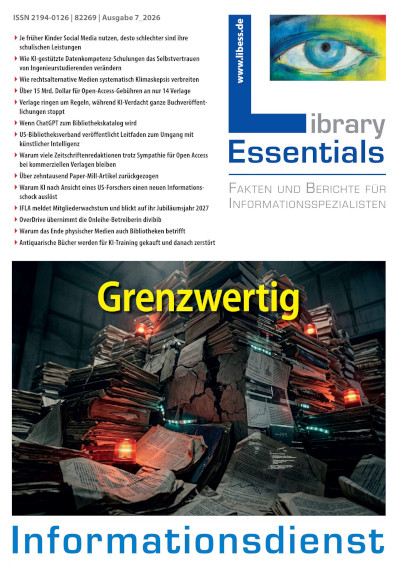
Aktuelles aus
L
ibrary
Essentials

In der Ausgabe 04/2026 (Mai 2026) lesen Sie u.a.:

  • Wie verlässlich sind Metadaten für Forschungsdaten wirklich?
  • Erfundene Quellen – wie KI-Zitationen die Wissenschaft unter Druck setzen
  • Zwischen Bildschirmzeit, Stress und Lernverlust
  • Warum Bibliotheken im Zeitalter von KI wichtiger werden und mit einem Vertrauensparadox zu kämpfen haben
  • Schweden setzt in Schulen wieder auf Bücher
  • Warum KI-Kompetenz mehr sein muss als Toolwissen
  • Wie stark KI-Texte das Netz schon prägen
  • Open Access bringt Vorteile, aber nicht in jedem Fach auf die gleiche Weise
  • Was ChatGPT und Ghostwriting über Autorschaft verraten
  • Warum E-Books in US-Schulen zur Kostenfrage werden
u.v.m.
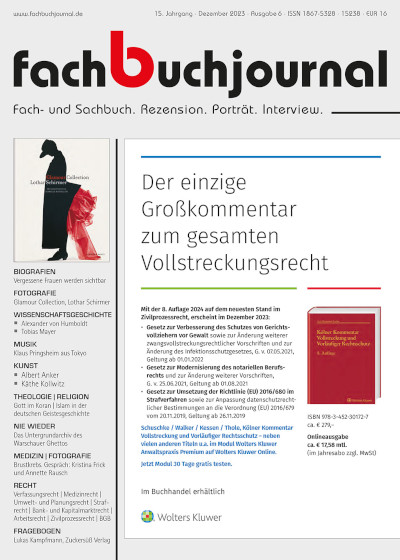
  fachbuchjournal
2009 bis 2023

Adoption of open research practices exceeding expectations

Analysis by Taylor & Francis and DataSeer finds
52% of sampled articles include a Data Availability Statement

New analysis of open research practices suggests that researchers are increasingly motivated to share their data by factors beyond policy mandates, such as enhanced visibility, impact, and collaboration. The investigation by Taylor & Francis and DataSeer found that over half of authors included a Data Availability Statement (DAS) in their journal article, explaining whether and how readers can access data, and a third of researchers in some disciplines openly shared their data.

Open research (or 'open science') makes all the outputs of a research project available for others to read, reuse, and build upon. Sharing outputs such as data, code, and software supports the transparency, reproducibility, and replicability of results. This in turn encourages trust in research and allows for stronger, more rigorous academic debate.

To assess the extent to which researchers are adopting open research practices, Taylor & Francis and DataSeer created an AI-driven landscape analysis of open research indicators across a sample of over 8,000 Taylor & Francis journal articles published in 2023.

The results published in a new report, 'Moving the needle on open data', reveal considerable variation of uptake by discipline and geography. The report also uncovers how many authors are openly sharing the code and software related to their research; the proportion that are depositing a preprint of their article; and the adoption of ORCID iDs.

A key finding is that researchers are going beyond the minimum open research requirements of the journal they publish in. Given that not all journals currently mandate the inclusion of a DAS, the team expected around a third of articles would include one. In fact, they found that just over half of researchers (52%) had done so. Similarly, a third of researchers in some disciplines chose to openly share their research data regardless of the journal’s policy.

“We were very encouraged by the results of this analysis and the current uptake of open research practices has exceeded our expectations in every area,” commented Rebecca Taylor-Grant, Director of Open Science Strategy & Innovation at Taylor & Francis. “This work with DataSeer will now help us to better support our authors in taking this good practice even further.”

“Our Open Science Metrics provide unique business intelligence that reveal behavioral patterns, opportunities, and, as in this case, progress toward more open, rapid, and reproducible research,” said Tim Vines, founder and CEO of DataSeer. “Regular tracking of these data points empowers publishers to adjust their policies in step with research culture and continue to improve.”

Taylor & Francis is committed to working collaboratively with the academic community to drive a sustainable shift toward open research. The publisher will use these insights to develop discipline-specific support for authors across its journal portfolio of over 2,700 titles.

https://insights.taylorandfrancis.com/research-impact/moving-the-needle-on-open-data-new-study/