



































INNOVATIV
Band 79: Janet Wagner Band 78: Philip Franklin Orr Band 77: Carina Dony Band 76:
Linda Freyberg
Sabine Wolf (Hrsg.)
Band 75: Denise Rudolph Band 74: Sophia Paplowski Band 73: Carmen Krause Band 72:
Katrin Toetzke
Dirk Wissen
Band 71: Rahel Zoller Band 70: Sabrina Lorenz Band 69: Jennifer Hale Band 68:
Linda Schünhoff
Benjamin Flämig
Band 67:
Wilfried Sühl-Strohmenger
Jan-Pieter Barbian
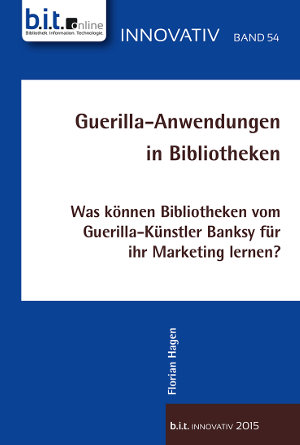
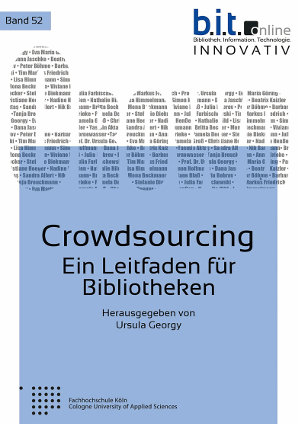
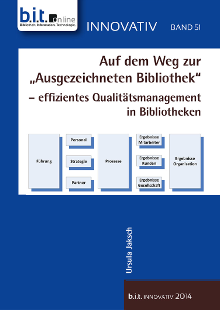
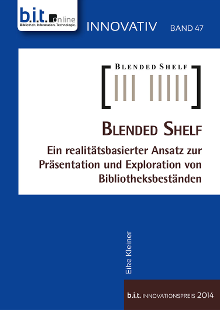
Band 66: Tina Schurig Band 65: Christine Niehoff Band 64: Eva May Band 63: Eva Bunge Band 62: Nathalie Hild Band 61: Martina Haller Band 60: Leonie Flachsmann Band 59: Susanne Göttker Band 58: Georg Ruppelt Band 57: Karin Holste-Flinspach Band 56: Rafael Ball Band 55: Bettina Schröder Band 54: Florian Hagen Band 53: Anthea Zöller Band 52: Ursula Georgy Band 51: Ursula Jaksch Band 50: Hermann Rösch (Hrsg) Band 49: Lisa Maria Geisler Band 48: Raphaela Schneider Band 47: Eike Kleiner
Bestellen Sie jetzt online!
1. März 2026
  WEITERE NEWS
Aktuelles aus
L
ibrary
Essentials

In der Ausgabe 10/202501/2026 (Dezember – Januar 2025–2026) lesen Sie u.a.:

  • Soziale Medien und Aufmerksamkeits­entwicklung bei Kindern: Neue Lang­zeitdaten zur ADHS-Risikodiskussion
  • Repositorien im Wandel: Analyse zentraler Einflussfaktoren für die nächsten Jahre
  • Wie inklusiv Sammlungen in Bibliotheken und Archiven wirklich sind
  • Synergien von KI-Chat und Suche:
    Wie unterschiedliche Altersgruppen
    Information Retrieval neu gestalten
  • Kulturerbe-Daten im Zeitalter der KI:
    Ein neues Zugangsmodell für Institutionen
  • Jugendliche, soziale Medien und KI-Chatbots: Digitale Nutzungsrealitäten 2025
  • Buchclubs als unterschätzte Brücke zwischen Campusleben und Bibliothek: Neue Impulse aus US-Hochschulbibliotheken
  • AI Librarian in Japan
  • Altersgrenzen für soziale Medien:
    Europas nächste Regulierungsdebatte
  • KI und Journalismus:
    Neue Machtverschiebungen
    im Markt für Nachrichteninhalte
  • Print ist tot, es lebe Print!
u.v.m.
  fachbuchjournal

The Minnesota Bridge Consortium Adopts Ex Libris Alma and Primo

Carleton College and St. Olaf College move to the cloud to provide students, faculty, and library staff with unified services across the two campuses

Ex Libris Group® is pleased to announce that the Minnesota-based Bridge Consortium, consisting of St. Olaf College and Carleton College, has selected Ex Libris Alma® for resource management and Ex Libris Primo® for resource discovery and delivery. The Bridge Consortium is migrating from an Innovative Interfaces Millennium integrated library system.

Roberta Lembke, director of library and information technology services at St. Olaf College, commented: “Our search team did an extensive review of the available options for the Bridge Consortium. Alma and Primo came out as the top choice for us for many reasons. Of course, the user experience is paramount and with Primo we have the flexibility to develop an interface that meets and exceeds user expectations. Other key factors in our decision included the unified management of both print and electronic resources, open access to our data, integrated e-resource management, the superior central index of Primo, customizable staff workflow functions, and the ability to customize search options. One aspect I am most excited about is that Alma and Primo will give us a technical foundation upon which we can further develop our consortial activities in the area of staff sharing and workload balancing. Alma and Primo made our decision easy.”

Brad Schaffner, college librarian at Carleton College, noted: “We are looking forward to implementing Alma and Primo. After examining many systems, we found that this combination meets the information needs of our users. In addition, it gives our library staff an opportunity to further enhance our library collaboration as part of the Bridge Consortium.”

“I am happy to welcome the Bridge Consortium to the North American Alma and Primo communities,” remarked Eric Hines, president of Ex Libris North America. “This adoption of Alma and Primo reflects the rapidly increasing implementation of our solutions not only among individual academic and research libraries but also among library consortia. The Ex Libris vision is to transform library operations and foster interaction and collaboration, at the consortium level, within universities, and through our growing Community Zone.”

www.exlibrisgroup.com