










































INNOVATIV
Band 79: Janet Wagner Band 78: Philip Franklin Orr Band 77: Carina Dony Band 76:
Linda Freyberg
Sabine Wolf (Hrsg.)
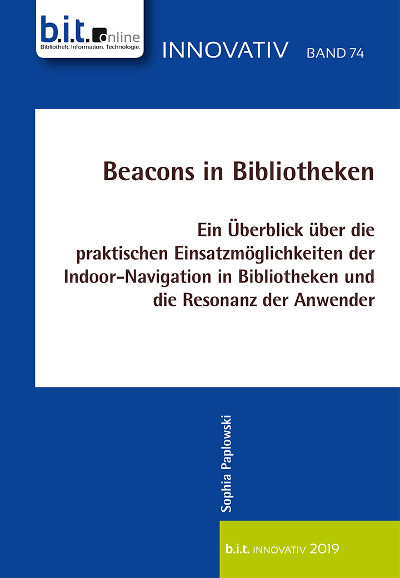
Band 75: Denise Rudolph Band 74: Sophia Paplowski Band 73: Carmen Krause Band 72:
Katrin Toetzke
Dirk Wissen
Band 71: Rahel Zoller Band 70: Sabrina Lorenz Band 69: Jennifer Hale Band 68:
Linda Schünhoff
Benjamin Flämig
Band 67:
Wilfried Sühl-Strohmenger
Jan-Pieter Barbian
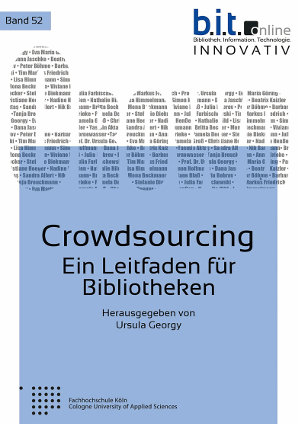
Band 66: Tina Schurig Band 65: Christine Niehoff Band 64: Eva May Band 63: Eva Bunge Band 62: Nathalie Hild Band 61: Martina Haller Band 60: Leonie Flachsmann Band 59: Susanne Göttker Band 58: Georg Ruppelt Band 57: Karin Holste-Flinspach Band 56: Rafael Ball Band 55: Bettina Schröder Band 54: Florian Hagen Band 53: Anthea Zöller Band 52: Ursula Georgy Band 51: Ursula Jaksch Band 50: Hermann Rösch (Hrsg) Band 49: Lisa Maria Geisler Band 48: Raphaela Schneider Band 47: Eike Kleiner
Bestellen Sie jetzt online!
1. März 2026
  WEITERE NEWS
Aktuelles aus
L
ibrary
Essentials

In der Ausgabe 10/202501/2026 (Dezember – Januar 2025–2026) lesen Sie u.a.:

  • Soziale Medien und Aufmerksamkeits­entwicklung bei Kindern: Neue Lang­zeitdaten zur ADHS-Risikodiskussion
  • Repositorien im Wandel: Analyse zentraler Einflussfaktoren für die nächsten Jahre
  • Wie inklusiv Sammlungen in Bibliotheken und Archiven wirklich sind
  • Synergien von KI-Chat und Suche:
    Wie unterschiedliche Altersgruppen
    Information Retrieval neu gestalten
  • Kulturerbe-Daten im Zeitalter der KI:
    Ein neues Zugangsmodell für Institutionen
  • Jugendliche, soziale Medien und KI-Chatbots: Digitale Nutzungsrealitäten 2025
  • Buchclubs als unterschätzte Brücke zwischen Campusleben und Bibliothek: Neue Impulse aus US-Hochschulbibliotheken
  • AI Librarian in Japan
  • Altersgrenzen für soziale Medien:
    Europas nächste Regulierungsdebatte
  • KI und Journalismus:
    Neue Machtverschiebungen
    im Markt für Nachrichteninhalte
  • Print ist tot, es lebe Print!
u.v.m.
  fachbuchjournal

Springer Nature launches research solution for the life sciences

Springer Nature Experiments is a tool to help researchers discover the most relevant protocols and methods

Springer Nature has launched a new, free-to-use research solution, Springer Nature Experiments, to help researchers in the life sciences advance discovery by accessing the most relevant protocols and methods to support their research projects.   

Protocols are “recipes” used in laboratory research to support the design and implementation of reproducible experiments. The step-by-step instructions help researchers recreate an experiment by typically including information on the materials required, equipment and set-up. Methods are new scientific procedures for solving existing problems. Together, these two different types of content are the cornerstone for scientists to successfully conduct their research.  

Springer Nature publishes the largest available collection of protocols and methods for the life sciences with content from SpringerProtocols, Nature Methods, Nature Protocols and Protocol Exchange – the free repository for scientists to share their protocols with the scientific community. Springer Nature Experiments provides access to all of these through a single easy-to-use platform, designed to save researchers’ time.   

Mirko Walter, Head of the Database Research Group at Springer Nature said:  “We didn’t want to settle for just having the biggest resource in terms of volume. We wanted to develop a solution that really tackles some of the challenges that researchers face day-to-day, such as finding the right protocol for their project. With searches often providing many results, and the task of comparing lengthy protocols side-by-side being massively time-consuming, Springer Nature Experiments helps researchers address this and advance discovery by accelerating research projects.”  

The platform uses advanced knowledge models to categorise content based on techniques and organisms – the two most commonly used search categories identified in user research. With the help of cutting-edge artificial intelligence and text mining technologies, these terms are recognised and extracted from the content, enabling users to perform searches and narrow down their results quickly and easily.  

In addition, users can evaluate and compare protocols prior to accessing the full-text with the help of protocol landing pages. These summarize key information such as the keywords mentioned, article history and citations which  gives an indication of whether the protocol has been used successfully in other research projects.

https://experiments.springernature.com