





































INNOVATIV
Band 79: Janet Wagner Band 78: Philip Franklin Orr Band 77: Carina Dony Band 76:
Linda Freyberg
Sabine Wolf (Hrsg.)
Band 75: Denise Rudolph Band 74: Sophia Paplowski Band 73: Carmen Krause Band 72:
Katrin Toetzke
Dirk Wissen
Band 71: Rahel Zoller Band 70: Sabrina Lorenz Band 69: Jennifer Hale Band 68:
Linda Schünhoff
Benjamin Flämig
Band 67:
Wilfried Sühl-Strohmenger
Jan-Pieter Barbian
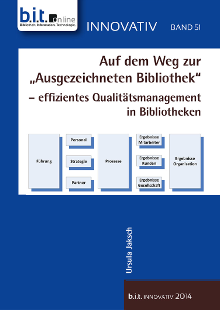
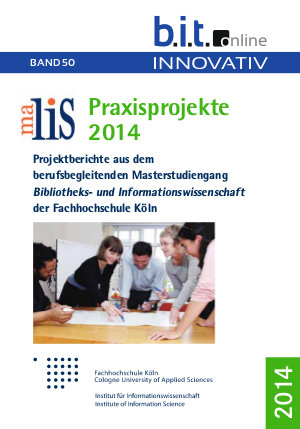
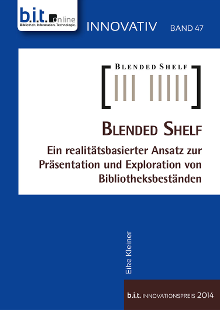
Band 66: Tina Schurig Band 65: Christine Niehoff Band 64: Eva May Band 63: Eva Bunge Band 62: Nathalie Hild Band 61: Martina Haller Band 60: Leonie Flachsmann Band 59: Susanne Göttker Band 58: Georg Ruppelt Band 57: Karin Holste-Flinspach Band 56: Rafael Ball Band 55: Bettina Schröder Band 54: Florian Hagen Band 53: Anthea Zöller Band 52: Ursula Georgy Band 51: Ursula Jaksch Band 50: Hermann Rösch (Hrsg) Band 49: Lisa Maria Geisler Band 48: Raphaela Schneider Band 47: Eike Kleiner
Bestellen Sie jetzt online!
10. November 2025
  WEITERE NEWS
Aktuelles aus
L
ibrary
Essentials

In der Ausgabe 7/2025 (Oktober 2025) lesen Sie u.a.:

  • Wirtschaftlicher Nutzen und Potenziale von Open Science
  • Von der Auskunfts­theke zum Single-Service-Desk: aktuelle Service­modelle in großen wissenschaftlichen Bibliotheken
  • Medienkompetenz und Belastung:
    Eltern unter Druck
  • Was die Gesellschaft zusammenhält:
    Welche Rolle öffentlich-rechtliche Medien heute spielen
  • Neue KI-Skills von Bibliothekar:innen gefragt
  • Stereotype Darstellungen von Bibliothekar:innen durch ChatGPT
  • Digitale Bibliotheken: Barrierefreiheit
    bleibt für blinde und sehbehinderte Menschen oft auf der Strecke
  • Generative KI und die Rolle der Bibliothekar:innen im Fächerkontext
  • Wissenschaftsgeleitet, offen, souverän: Die Allianz der Wissenschaftsorganisationen setzt den Rahmen für Publizieren 2026 bis 2030
  • Wenn die KI-Suche blockiert
  • Unsichtbare Arbeit für Künstliche Intelligenz
  • JSTOR: vom digitalen Archiv
    zur Innovationsplattform
u.v.m.
  fachbuchjournal

Springer Nature partners with Cancer Research UK
to improve scientists’ skills in research data management

Three two-day workshops led by the Nature Research Academies will provide Cancer Research UK-funded researchers
with training on the principles and practices of research data sharing

© Cancer Research UK

Early career researchers, clinical fellows and in-house research support staff at Cancer Research UK will participate in specially tailored research data training workshops organized by the Nature Research Academies. The two-day workshops cover the theory and practice of data sharing and management with the aim of ensuring researchers feel more confident and knowledgeable about how and where they should store and share their data. The first workshop will take place from 9 to 10 May at the Springer Nature Campus in London, and two further workshops are planned for July and September this year.

“Our extensive surveys of researchers in all fields and regions show that many researchers – around 65 per cent – feel that there is not sufficient training or advice to support research data management. We are delighted to have the opportunity to partner with Cancer Research UK to offer their researchers practical support that will increase data sharing and best practice. These workshops are the latest in a series of initiatives Springer Nature is championing to help researchers with their data,” said Iain Hrynaszkiewicz, Head of Data Publishing at Springer Nature.

The in-person workshop format is aimed at groups of up to 30 participants to ensure an interactive learning experience where attendees participate and ask questions throughout the day. Trainers are specialists with years of experience as research data managers, curators, editors and publishers.

The workshops are one of Springer Nature’s Research Data products and services for institutions, including funding agencies, which launched in 2018. In advance of the workshops, Springer Nature and Cancer Research UK have surveyed attendees to understand their training needs, and allow the content to be adapted to the knowledge and research disciplines of the group. General topics covered include:

  • Complying with data sharing policies
  • Preparing Data Management Plans
  • Creating valuable metadata and understanding metadata standards
  • Copyright and data
  • Approaches to sensitive data sharing
  • Creating reusable tabular data

“At Cancer Research UK we ensure that the data generated by the research we fund is put to maximum use by the cancer research community and, whenever possible, is translated to deliver patient benefit. It’s our policy that all data be considered for sharing and made as widely and freely accessible as possible while safeguarding intellectual property, the privacy of patients and confidential data. We are delighted to be partnering with Springer Nature to provide training to ensure our researchers are well equipped to do this,” said Dr Fiona Reddington, Head of Population, Prevention and Behavioural Research Funding at Cancer Research UK.

partnerships.nature.com/academies