



INNOVATIV
Band 79: Janet Wagner Band 78: Philip Franklin Orr Band 77: Carina Dony Band 76:
Linda Freyberg
Sabine Wolf (Hrsg.)
Band 75: Denise Rudolph Band 74: Sophia Paplowski Band 73: Carmen Krause Band 72:
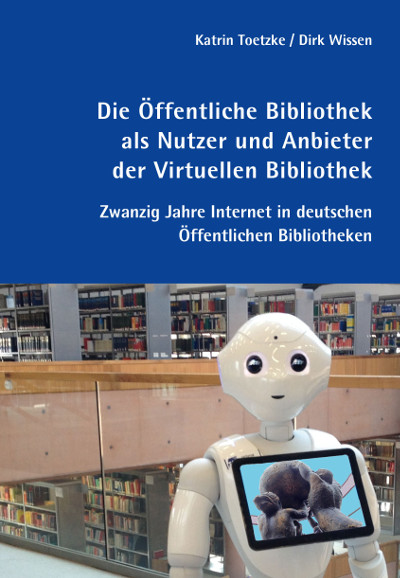
Katrin Toetzke
Dirk Wissen
Band 71: Rahel Zoller Band 70: Sabrina Lorenz Band 69: Jennifer Hale Band 68:
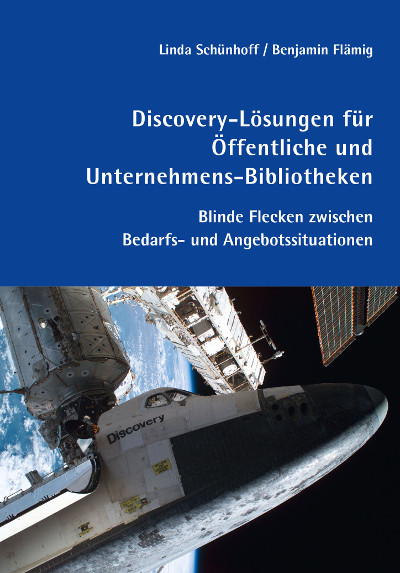
Linda Schünhoff
Benjamin Flämig
Band 67:
Wilfried Sühl-Strohmenger
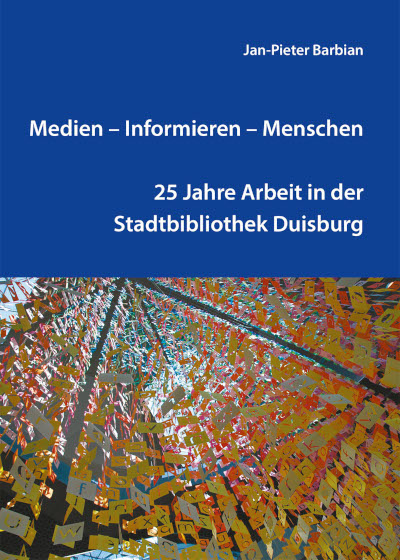
Jan-Pieter Barbian
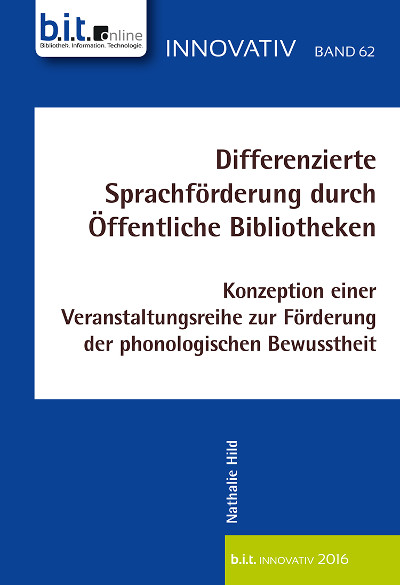
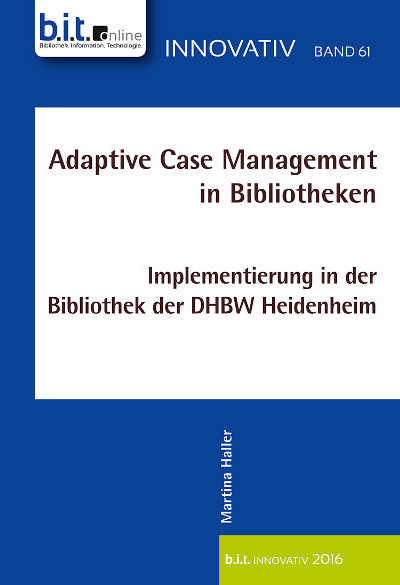
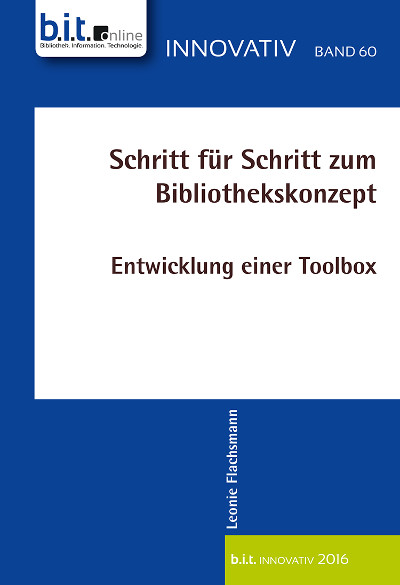
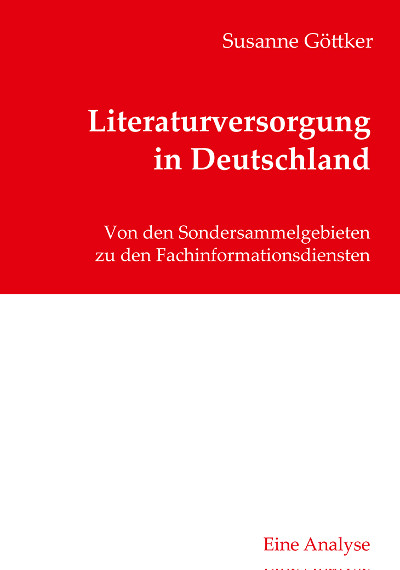
Band 66: Tina Schurig Band 65: Christine Niehoff Band 64: Eva May Band 63: Eva Bunge Band 62: Nathalie Hild Band 61: Martina Haller Band 60: Leonie Flachsmann Band 59: Susanne Göttker Band 58: Georg Ruppelt Band 57: Karin Holste-Flinspach Band 56: Rafael Ball Band 55: Bettina Schröder Band 54: Florian Hagen Band 53: Anthea Zöller Band 52: Ursula Georgy Band 51: Ursula Jaksch Band 50: Hermann Rösch (Hrsg) Band 49: Lisa Maria Geisler Band 48: Raphaela Schneider Band 47: Eike Kleiner
Bestellen Sie jetzt online!
28. Februar 2026
  WEITERE NEWS
Aktuelles aus
L
ibrary
Essentials

In der Ausgabe 10/202501/2026 (Dezember – Januar 2025–2026) lesen Sie u.a.:

  • Soziale Medien und Aufmerksamkeits­entwicklung bei Kindern: Neue Lang­zeitdaten zur ADHS-Risikodiskussion
  • Repositorien im Wandel: Analyse zentraler Einflussfaktoren für die nächsten Jahre
  • Wie inklusiv Sammlungen in Bibliotheken und Archiven wirklich sind
  • Synergien von KI-Chat und Suche:
    Wie unterschiedliche Altersgruppen
    Information Retrieval neu gestalten
  • Kulturerbe-Daten im Zeitalter der KI:
    Ein neues Zugangsmodell für Institutionen
  • Jugendliche, soziale Medien und KI-Chatbots: Digitale Nutzungsrealitäten 2025
  • Buchclubs als unterschätzte Brücke zwischen Campusleben und Bibliothek: Neue Impulse aus US-Hochschulbibliotheken
  • AI Librarian in Japan
  • Altersgrenzen für soziale Medien:
    Europas nächste Regulierungsdebatte
  • KI und Journalismus:
    Neue Machtverschiebungen
    im Markt für Nachrichteninhalte
  • Print ist tot, es lebe Print!
u.v.m.
  fachbuchjournal

Wageningen University and Research Center and Vrije Universiteit Amsterdam
Select Primo and Primo Central Index

Rich functionality and seamless access to scholarly electronic content
make Primo the natural choice for Dutch academic libraries

Ex Libris® Group, a world leader in the provision of library automation solutions, is pleased to announce that Wageningen University and Research Center (Wageningen UR) and Vrije Universiteit Amsterdam (VU Amsterdam) have selected the Primo® discovery and delivery solution, together with the Primo Central Index of scholarly e-content. Both institutions opted for the Primo Direct deployment package.  

The Primo platform offers users a complete discovery experience by providing access to all the library’s information resources and meeting users’ every research need. As a cloud-based solution, Primo Direct spares libraries the tasks of implementation and ongoing maintenance while enabling staff to further configure and customize the system through the Primo administrative interface.  

At VU Amsterdam, Primo will provide a single interface to the library’s Vubis Smart library system along with the library’s wealth of electronic resources. “We are looking forward to making Primo available to our users as a seamless interface to all our collections,” commented Mrs. José Frijns, library director at the University Library of VU Amsterdam. “Following a thorough evaluation of discovery systems, we found that Primo offers the maximum flexibility and capabilities for customized usage. Having used the SFX® OpenURL link resolver and the MetaLib® metasearch system for several years, we have found Ex Libris to be consistently responsive and attentive to our requirements, and we look forward to receiving the same standard of care with our Primo implementation.”  

Mr. Ger Spikman, library director at Wageningen UR, explained that the availability of the Primo Central Index was a major factor in the university’s decision. “Although our team is technically very competent, having developed a homegrown integrated library system and digital repository, we needed a comprehensive, external index of electronic content to enable our users to access our subscription-based resources. In addition, Primo integrates seamlessly with our SFX and MetaLib systems, and recommendations from the bX article recommender service are displayed along with the Primo search results.”  

“Primo’s openness and flexibility allow us to customize many aspects of the system, such as the user interface and the degree of visibility of our local collection when it is searched alongside the global content covered by Primo Central,” added Mr. Spikman. “Together these capabilities enable us to fine-tune the solution to meet our users’ unique needs.”  

“I am delighted to welcome VU Amsterdam and Wageningen UR—major Dutch educational institutions—to the expanding European Primo community,” noted Ullrich Jüngling, vice president of sales for Central and East Europe. “Primo’s ability to integrate with Ex Libris and third-party library systems, such as Vubis at VU Amsterdam and LBS at the University of Twente, was central to these institutions’ decision to adopt the Primo solution.”  

About Wageningen UR
A staff of 6,500 and 10,000 students from over 100 countries are gathered at Wageningen UR to study and research healthy food and living environments for governments and the business community at large. The strength of Wageningen UR lies in its ability to bring together the forces of two specialized research institutes—Wageningen University and Van Hall Larenstein University of Applied Sciences. It also lies in the combined efforts of scholars in the various fields of natural and social sciences. This union of expertise leads to scientific breakthroughs that can quickly be put into practice and incorporated into education.  

About VU Amsterdam
Amsterdam, the capital of the Netherlands, has been a renowned cultural, scientific, and commercial center for many centuries. It was here, in 1880, that VU University Amsterdam was established by orthodox Protestants. VU stands for Vrije Universiteit, which means Free University, referring to freedom from state and church interference. Nowadays VU Amsterdam aims to be inspiring, innovative, and involved. Throughout the past century, the university has continued to expand. It now comprises twelve faculties and has teaching facilities for 26,000 students.  

www.exlibrisgroup.com