









































INNOVATIV
Band 79: Janet Wagner Band 78: Philip Franklin Orr Band 77: Carina Dony Band 76:
Linda Freyberg
Sabine Wolf (Hrsg.)
Band 75: Denise Rudolph Band 74: Sophia Paplowski Band 73: Carmen Krause Band 72:
Katrin Toetzke
Dirk Wissen
Band 71: Rahel Zoller Band 70: Sabrina Lorenz Band 69: Jennifer Hale Band 68:
Linda Schünhoff
Benjamin Flämig
Band 67:
Wilfried Sühl-Strohmenger
Jan-Pieter Barbian
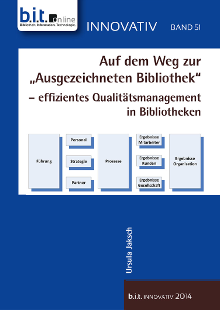
Band 66: Tina Schurig Band 65: Christine Niehoff Band 64: Eva May Band 63: Eva Bunge Band 62: Nathalie Hild Band 61: Martina Haller Band 60: Leonie Flachsmann Band 59: Susanne Göttker Band 58: Georg Ruppelt Band 57: Karin Holste-Flinspach Band 56: Rafael Ball Band 55: Bettina Schröder Band 54: Florian Hagen Band 53: Anthea Zöller Band 52: Ursula Georgy Band 51: Ursula Jaksch Band 50: Hermann Rösch (Hrsg) Band 49: Lisa Maria Geisler Band 48: Raphaela Schneider Band 47: Eike Kleiner
Bestellen Sie jetzt online!
28. Februar 2026
  WEITERE NEWS
Aktuelles aus
L
ibrary
Essentials

In der Ausgabe 10/202501/2026 (Dezember – Januar 2025–2026) lesen Sie u.a.:

  • Soziale Medien und Aufmerksamkeits­entwicklung bei Kindern: Neue Lang­zeitdaten zur ADHS-Risikodiskussion
  • Repositorien im Wandel: Analyse zentraler Einflussfaktoren für die nächsten Jahre
  • Wie inklusiv Sammlungen in Bibliotheken und Archiven wirklich sind
  • Synergien von KI-Chat und Suche:
    Wie unterschiedliche Altersgruppen
    Information Retrieval neu gestalten
  • Kulturerbe-Daten im Zeitalter der KI:
    Ein neues Zugangsmodell für Institutionen
  • Jugendliche, soziale Medien und KI-Chatbots: Digitale Nutzungsrealitäten 2025
  • Buchclubs als unterschätzte Brücke zwischen Campusleben und Bibliothek: Neue Impulse aus US-Hochschulbibliotheken
  • AI Librarian in Japan
  • Altersgrenzen für soziale Medien:
    Europas nächste Regulierungsdebatte
  • KI und Journalismus:
    Neue Machtverschiebungen
    im Markt für Nachrichteninhalte
  • Print ist tot, es lebe Print!
u.v.m.
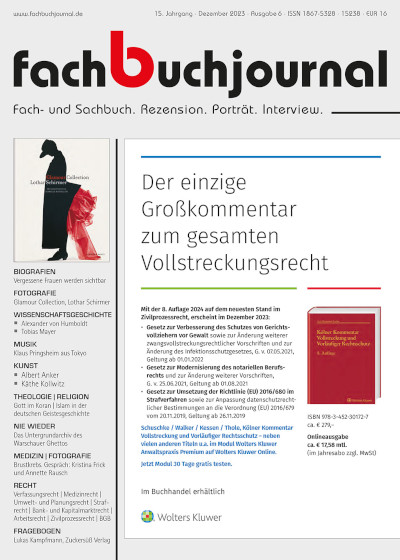
  fachbuchjournal

Ex Libris Announces the Release of Primo Version 3.1

By integrating user services in the library environment and reducing
information overload, Primo 3.1 takes discovery to the next level

Ex Libris® Group announce the release of version 3.1 of the Primo® discovery and delivery solution. The new functionality in this version is the product of continued collaboration with the rapidly expanding international Primo community, which now consists of over 850 sites that span 45 countries on six continents.

Highlights of the new Primo version include the following:

  • Enhanced ranking: The Primo ranking algorithm now incorporates data from the bX article recommender service. The data reflect actual usage of journal articles by the global scholarly community.
  • Optimal display of results: Grouping of identical results in the Primo Central Index has been enhanced to reduce information overload.
  • Context as king: By displaying snippets from both Primo Central and local records, Primo 3.1 helps users assess the relevance of an item. The snippets—which each consist of 161 characters—are extracted from the abstract or the full text.
  • Greater configurability of OPAC functionality in the Primo interface: All the OPAC information is available on the Location tab, and library staff can fully configure the display.
  • Tailored consortium support: With Primo 3.1, consortium members can boost (accurately rank records by combining ranking or preference functions) records from their own institution in a consortium environment.
  • Multilingual support: Primo 3.1 offers improved support for search in traditional and simplified Chinese.

“We are looking forward to working with the enhanced functionality of Primo 3.1,” commented Naomi Greidinger, deputy director of Haifa University Library. “We believe that the integration of article recommendations will fit into users’ search flow and help them locate items they had not thought of consulting. In addition, with the enhanced range of library activities that users can perform in the Primo interface, the system will present an even more natural and intuitive experience.”

Jørgen Madsen, Primo product manager, remarked: “Primo 3.1 takes context to the heart of the discovery experience. The interplay between an information system’s user interface, the content offered, and the way in which the system “understands” the user’s context is central to the success of a discovery solution. Primo’s fusion of services embedded in a modern user interface, leveraging aggregations of rich content and usage data, provides an advanced discovery and delivery solution that libraries can adjust to meet the diverse needs of contemporary users.”

www.exlibrisgroup.com