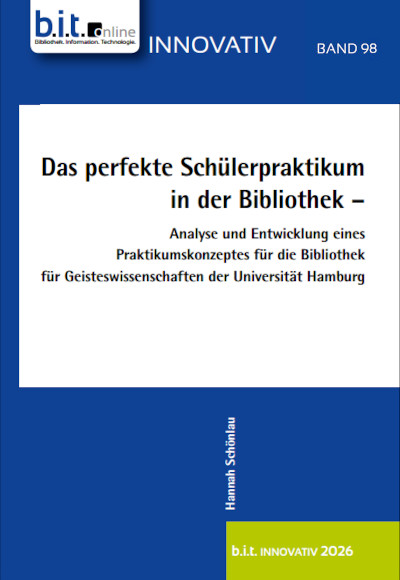

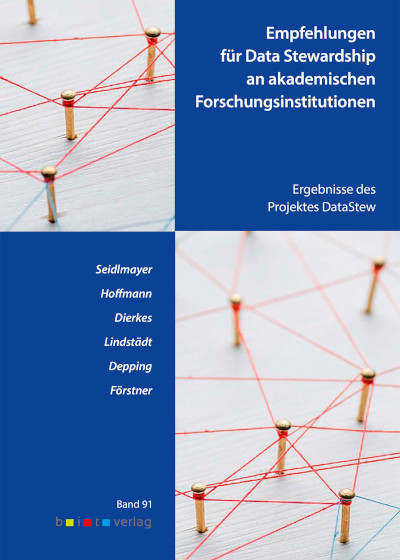

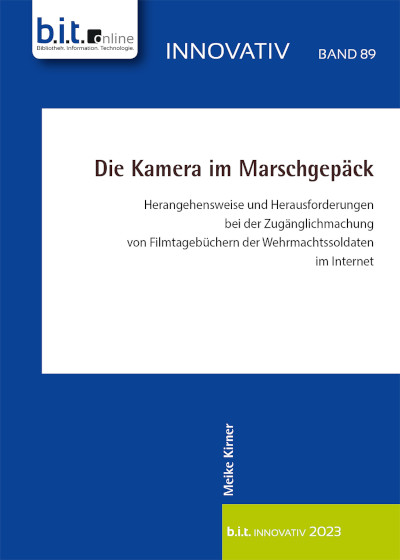





















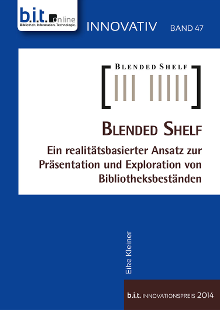

INNOVATIV
Band 79: Janet Wagner Band 78: Philip Franklin Orr Band 77: Carina Dony Band 76:
Linda Freyberg
Sabine Wolf (Hrsg.)
Band 75: Denise Rudolph Band 74: Sophia Paplowski Band 73: Carmen Krause Band 72:
Katrin Toetzke
Dirk Wissen
Band 71: Rahel Zoller Band 70: Sabrina Lorenz Band 69: Jennifer Hale Band 68:
Linda Schünhoff
Benjamin Flämig
Band 67:
Wilfried Sühl-Strohmenger
Jan-Pieter Barbian
Band 66: Tina Schurig Band 65: Christine Niehoff Band 64: Eva May Band 63: Eva Bunge Band 62: Nathalie Hild Band 61: Martina Haller Band 60: Leonie Flachsmann Band 59: Susanne Göttker Band 58: Georg Ruppelt Band 57: Karin Holste-Flinspach Band 56: Rafael Ball Band 55: Bettina Schröder Band 54: Florian Hagen Band 53: Anthea Zöller Band 52: Ursula Georgy Band 51: Ursula Jaksch Band 50: Hermann Rösch (Hrsg) Band 49: Lisa Maria Geisler Band 48: Raphaela Schneider Band 47: Eike Kleiner
Bestellen Sie jetzt online!
14. Oktober 2026
  WEITERE NEWS
Aktuelles aus
L
ibrary
Essentials

In der Ausgabe 08/2026 (Oktober 2026) lesen Sie u.a.:

  • Mehrheit der Jugendlichen befürwortet Social-Media-Verbot
  • Zwischen Überforderung und Verantwortung:
    Was Eltern über die digitale Welt ihrer Kinder wissen und was nicht
  • Der Informationsschock und
    die Zukunft des Bibliotheksberufs
  • Tim Coates analysiert 15 Jahre
    IMLS-Daten zu US-amerikanischen öffentlichen Bibliotheken
  • Was der Clarivate-Bericht 2026 über
    den KI-Stand in Bibliotheken verrät
  • Wie öffentliche Bibliotheken in den USA
    und Kanada mit KI-Policies umgehen
  • Schadet das digitale Ausleihen von Bibliotheken dem Buchmarkt?
  • PEN America dokumentiert eskalierende Zensur in US-amerikanischen
    öffentlichen Bibliotheken
  • Wie sich das Publikationsverhalten wissenschaftlicher Bibliothekar:innen wandelt
  • US-Hochschulbibliotheken fördern zunehmend das Wohlbefinden
    von Studierenden
  • Klage gegen Elsevier auf Rückzug einer Studie geht in Richtung Gerichtsverhandlung
  • Unabhängige Buchläden in Hongkong
u.v.m.
  fachbuchjournal
2009 bis 2023

ProQuest Releases Results of its 2016 Information Literacy Survey

Company aims to help researchers gain skills needed for lifelong success

Though 83% of librarians agree that information literacy affects college graduation rates and 97% believe that this skill set contributes to success in the workforce, 44% think that their library does not support information literacy instruction as much as it should.

A recent ProQuest survey of over 200 librarians from university, community college, high school and public libraries collected this insight and delved deeper into what librarians are doing to drive development of information literacy. A report on the survey’s full results can be found here:
www.proquest.com/documents/2016-Information-Literacy-Survey.html

“Overall, lack of budget and limited staffing were reported as some of the greatest obstacles for doing as much as they would like to drive development of this important skill set,” said Kevin Stehr, ProQuest Vice President of North American Sales. “But I think this response summed it up best — ‘We’re doing the best we can, but we always aspire to do more.’ At ProQuest, we want to empower librarians to be able to do more with what they have, and we’re committed to creating solutions that do just that.”

Because the ways that librarians support information literacy vary, from one-on-one search consultations to asynchronous video tutorials, ProQuest offers a range of services and products to help teach and reinforce this important topic.

To start, librarians can use ProQuest’s flexible acquisition models to offer authoritative print and digital content — from journals to videos and newspapers to working papers — on their budget. From reference content to provide a foundation to titles that offer vast breadth and depth of coverage on specific topics, ProQuest makes it easy and affordable to support researchers.

Librarians can also drive information literacy with ProQuest Research Companion, which helps students do more effective scholarly research and supports educators as they teach the core principles of finding, evaluating and using information. Research Companion features more than 80 short videos organized into nine Learning Modules that answer questions from all stages of the research process, from "How do I choose a topic?" to "How do I evaluate sources?" The platform integrates "pre" and "post" assessment questions to make the viewing experience more interactive, while allowing educators to measure students’ learning and identify gaps in their understanding.

www.proquest.com