











INNOVATIV
Band 79: Janet Wagner Band 78: Philip Franklin Orr Band 77: Carina Dony Band 76:
Linda Freyberg
Sabine Wolf (Hrsg.)
Band 75: Denise Rudolph Band 74: Sophia Paplowski Band 73: Carmen Krause Band 72:
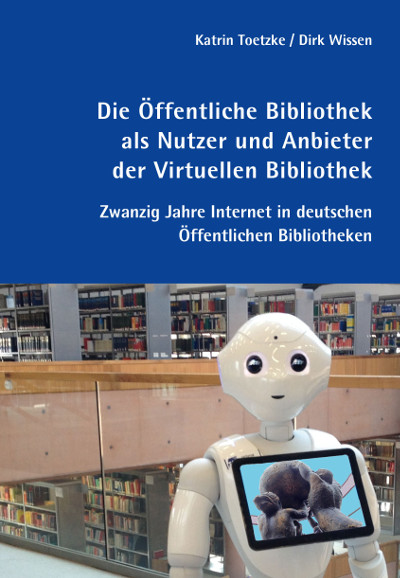
Katrin Toetzke
Dirk Wissen
Band 71: Rahel Zoller Band 70: Sabrina Lorenz Band 69: Jennifer Hale Band 68:
Linda Schünhoff
Benjamin Flämig
Band 67:
Wilfried Sühl-Strohmenger
Jan-Pieter Barbian
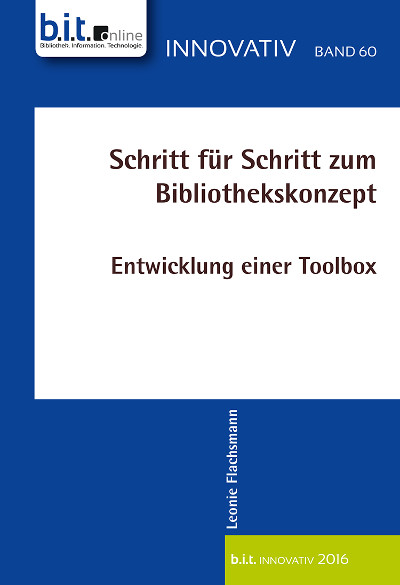
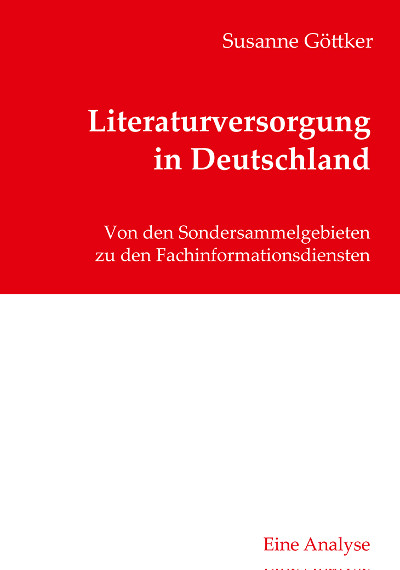
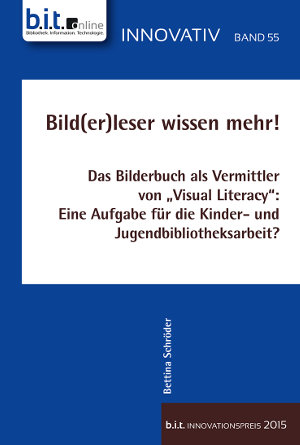
Band 66: Tina Schurig Band 65: Christine Niehoff Band 64: Eva May Band 63: Eva Bunge Band 62: Nathalie Hild Band 61: Martina Haller Band 60: Leonie Flachsmann Band 59: Susanne Göttker Band 58: Georg Ruppelt Band 57: Karin Holste-Flinspach Band 56: Rafael Ball Band 55: Bettina Schröder Band 54: Florian Hagen Band 53: Anthea Zöller Band 52: Ursula Georgy Band 51: Ursula Jaksch Band 50: Hermann Rösch (Hrsg) Band 49: Lisa Maria Geisler Band 48: Raphaela Schneider Band 47: Eike Kleiner
Bestellen Sie jetzt online!
13. März 2026
  WEITERE NEWS
Aktuelles aus
L
ibrary
Essentials

In der Ausgabe 02/2026 (März 2026) lesen Sie u.a.:

  • Seniorinnen und Senioren entdecken soziale Netzwerke – Chancen und Aufgaben für Bibliotheken
  • Chatbots im Auskunftsdienst wissenschaftlicher Bibliotheken
  • Bibliotheken unter Druck – Was der Hamburger Sparkurs über den Zustand
    des Wissenschaftssystems verrät
  • Die „Big Three“ der Wissenschaftsinformation – Web of Science, Scopus und OpenAlex im systematischen Vergleich
  • Der Strukturwandel im italienischen Buchmarkt – Lehren für Europa,
    die Leseförderung, den Buchhandel
    und Künstliche Intelligenz
  • GenAI in der Hochschulbildung –
    Wer forscht weltweit zu ChatGPT und Co.?
  • Jenseits des Akronyms –
    Wie wissenschaftliche Bibliotheken DEI
    unter politischem Druck neu verankern
  • Kann Bibliotherapie helfen, die Krisen
    der Gegenwart zu bewältigen?
  • Web-Barrierefreiheit pragmatisch umsetzen – Kleine Schritte mit großer Wirkung
  • Wenn die KI die Nachrichten auswählt, verändert sich die öffentliche Wahrnehmung
  • Zwischen Plattformökonomie und kulturellem Gedächtnis – Hat das physische Medium noch eine Zukunft?
u.v.m.
  fachbuchjournal

IOP Publishing moves to CC-BY licence
for open access articles and bibliographic metadata

IOP Publishing (IOP) has announced a significant change to its copyright arrangements for research published on an open access basis in the company’s wholly owned journals and for bibliographic metadata.  

As a result of this move, the company will adopt a more liberal Creative Commons licence (CC-BY 3.0) for future articles published on a 'gold' open access basis.  This licence allows others to distribute, remix, amend, and build upon a piece of work as long as they credit the original creation. The licences grant rights to the users of the content but do not replace the copyright, which remains with the copyright holder.

The change applies to articles being published on an open access basis in all IOP owned 'hybrid' journals and the gold open access titles New Journal of Physics and Environmental Research Letters.    

In addition to the change in licence for open access articles, the basic metadata of the articles in IOP's own journals will also be available for use under a CC-BY licence.  This is intended to increase the visibility of such data and to help clarify to third parties what they can and cannot do with metadata.    

Nicola Gulley, IOP's Editorial Director, said of the move, "IOP Publishing has long been a supporter of sustainable open access and we have a proud history of experimentation and innovation with different models of publishing.  We felt this new move was a natural step that will help the company fulfil its mission to provide the scientific community with tools to ensure the maximum dissemination of research, help foster collaborations between research groups, and meet the requirements of Funding Agencies and organisations."

Unless specifically requested, articles submitted before 25 October will be published under a Creative Commons-Non-Commercial-ShareAlike 3.0 licence. Articles submitted on or after 25th October will automatically be published under a CC-BY licence. IOP's copyright statements on iopscience.iop.org have been updated to reflect this change.